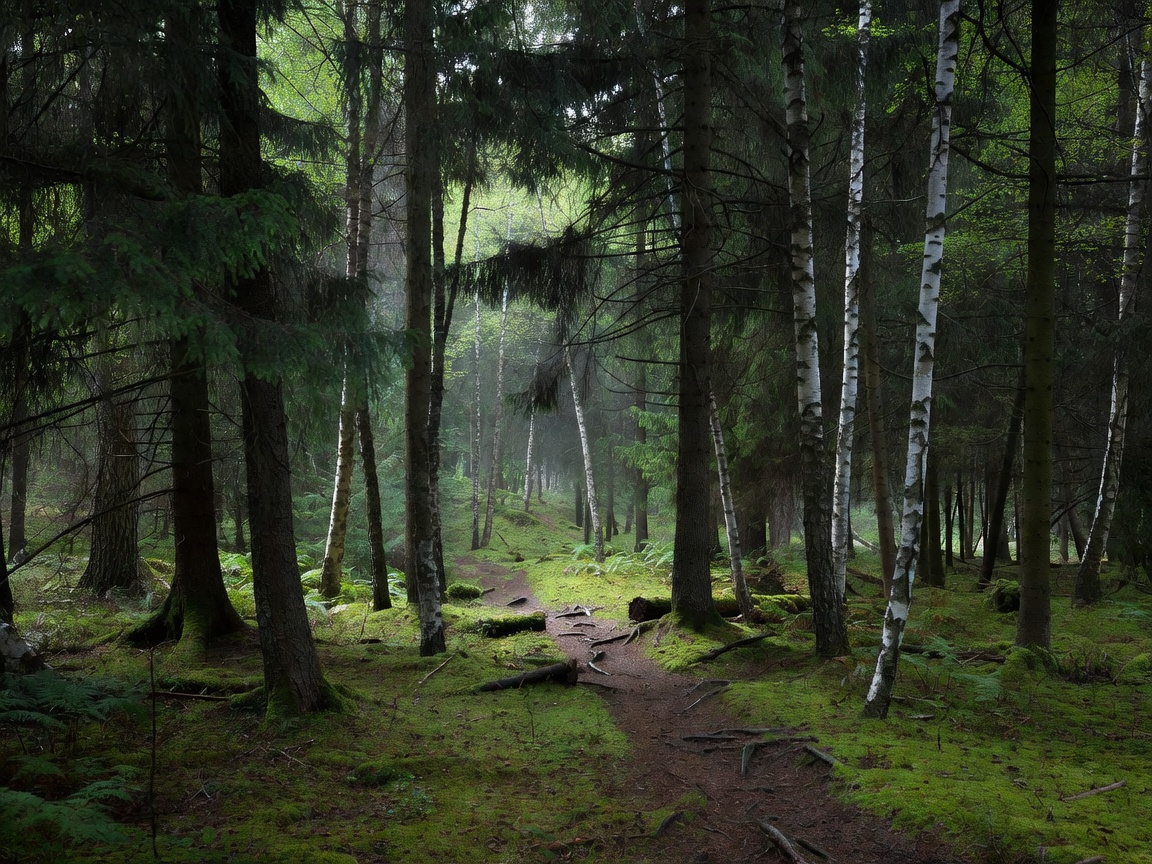
Forest character can change within a short journey. A coastal woodland may be damp and wind-shaped. A mountain forest may be steep, rocky and cooler. A managed lowland wood may have clear paths and regular spacing. These differences affect comfort, navigation and the type of attention a visitor can give the landscape.
Northern European forests
Across Scandinavia and the far north, boreal conditions favour conifers such as spruce and pine, with birch appearing in many areas. Growing seasons are short. Ground cover can include moss, lichen and low shrubs. Light may remain late in summer and disappear quickly in winter. Trails can be soft, rooty or affected by snow and frozen ground.
Baltic woodland
Baltic forests often combine pine, spruce, birch, alder and other broadleaf species. Sandy soils occur in some areas, while wetlands and heavier soils occur elsewhere. The landscape can feel open in pine stands and enclosed in mixed woodland. Check local access rules, especially near wetlands, reserves and private land.
Central European forests
Lowland and upland forests in central Europe commonly include beech, oak, hornbeam, spruce and fir. Many are crossed by established walking routes, but use varies by site. Rainfall, forestry work and seasonal storms can change conditions. A wide path does not always mean level ground, and a popular route may still become slippery after rain.
Alpine and mountain forests
Elevation changes temperature, vegetation and trail difficulty. Lower slopes may support mixed deciduous woodland. Higher slopes often shift toward conifers before open subalpine terrain. Expect gradients, loose surfaces, streams and rapid weather changes. A quiet pause requires a safe stopping place that does not obstruct other users.
Atlantic woodland
Atlantic climates bring frequent moisture and moderate temperatures. Woodland in western coastal areas may include oak, birch, ash, holly and planted conifers. Ferns, moss and wet leaf litter are common visual cues. Wind exposure and rain can matter more than temperature. Waterproof layers and secure footwear are useful planning choices.
Mediterranean and Balkan woodland
Mediterranean forests may include evergreen oak, pine, cork oak and aromatic shrubs. Summers can be hot and dry. Shade, water planning and fire restrictions become central. Balkan forests span varied elevations and can contain deciduous, coniferous and mixed communities. Terrain and access may change sharply between valleys and ridges.
Regional comparison
- Climate: controls moisture, heat and seasonal timing.
- Elevation: affects temperature, slope and vegetation.
- Soil: influences drainage, roots and trail firmness.
- Structure: managed paths, dense stands and open clearings create different experiences.
Good for
Use northern and Baltic settings for mossy, conifer-rich scenery. Choose central European woodland for varied broadleaf structure and established route networks. Mountain forests suit visitors comfortable with gradients. Mediterranean and Balkan areas suit careful shoulder-season planning where heat and fire rules matter.
What to know
Regional labels are broad. Conditions vary within every region. Follow signs, respect private land, keep to marked routes where required and check local notices before setting out.
Build a practical route brief.
Match landscape, season and effort before you travel.
Contact the Atlas team