A forest-bathing visit does not require perfect weather. It does require an honest plan. Check local forecasts, route information and access notices close to departure. Conditions can change during the day, especially in mountain, coastal and northern environments.
Spring
Spring brings emerging foliage, longer daylight and noticeable changes from week to week. Ground can remain wet after winter. Temperatures may vary between shade and open areas. Waterproof footwear, a spare layer and a slower pace help on muddy paths. Early leaves can make woodland feel open; later growth can reduce visibility.
Watch for fallen branches after storms and avoid trampling emerging plants. Do not assume a route is dry because the air feels mild. In some areas, insects become active as temperatures rise.
Summer
Longer daylight allows flexible timing, but heat and visitor activity may increase. Shade is useful, not guaranteed. Carry water and plan breaks away from busy trail junctions. Insects can be more noticeable near water and dense vegetation. Use repellent only according to its label and avoid disturbing wildlife.
Fire restrictions may apply in dry woodland. Never light a fire where prohibited. Do not discard matches, cigarettes or other hot materials. Early mornings and later afternoons can be more comfortable, but always account for the return journey.
Autumn
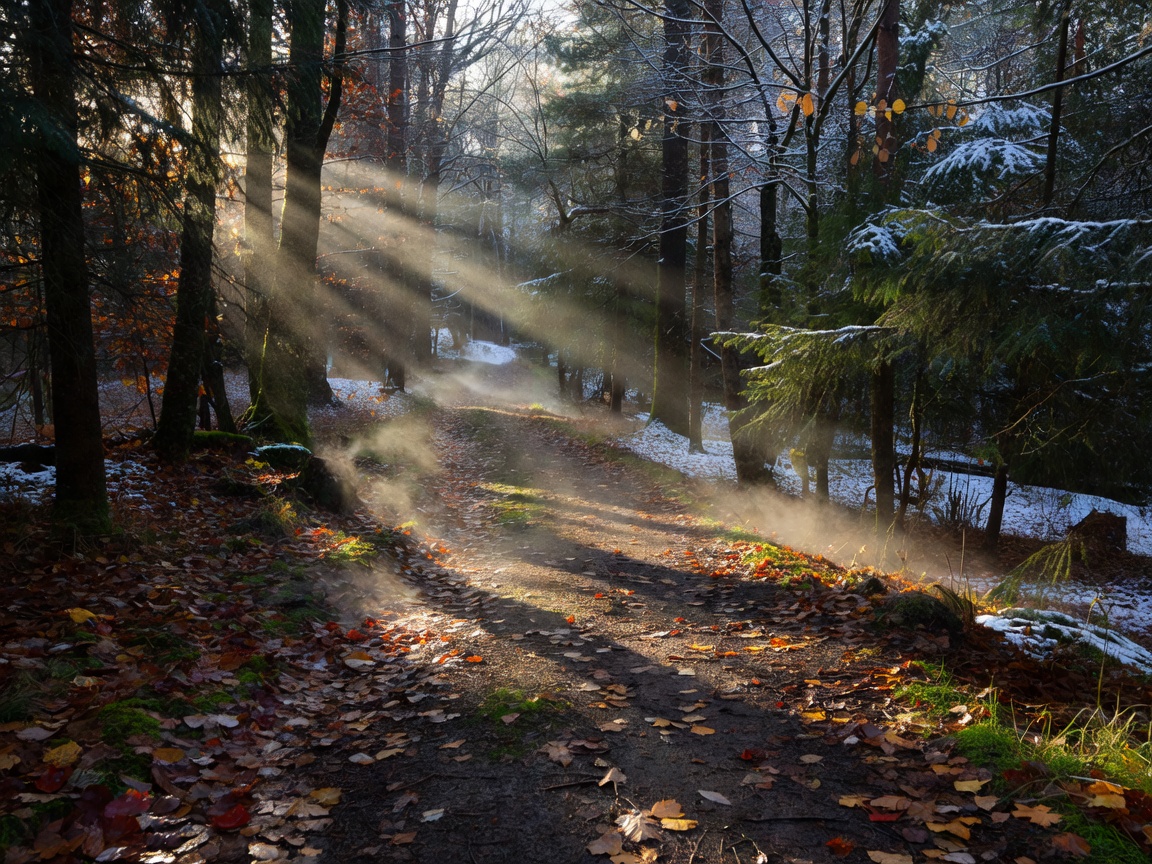
Changing foliage creates strong visual variation. Cooler air can make walking comfortable, but wet leaves hide roots and stones. Shorter days reduce the margin for delays. A headlamp can be sensible for remote or unfamiliar routes, but it does not replace route planning.
Wind can bring down branches. Avoid standing beneath visibly damaged trees and follow local warnings. Keep footwear secure on leaf-covered slopes. Leave cones, leaves, fungi and other natural objects where they are.
Winter
Winter may mean rain, snow, ice or simply low light, depending on location. Cold exposure becomes a planning issue. Use warm layers, gloves and footwear suited to the surface. Traction devices may be appropriate only when compatible with local conditions and guidance.
Snow can hide roots, drainage channels and route markers. Ice can make a short walk hazardous. Turn back before discomfort or fading light becomes a problem. Tell someone your plan for less accessible routes.
Seasonal comparison
- Spring: fresh growth, wet ground and variable temperatures.
- Summer: long light, heat, insects and higher visitor activity.
- Autumn: colour, wet leaves, wind and shorter days.
- Winter: cold, low light, snow or ice and reduced route certainty.
Good for
Choose spring for changing vegetation, summer for long daylight, autumn for foliage and winter for a quieter, more demanding visit. The best season depends on your tolerance for exposure, your access needs and the landscape.
What to know
Forecasts are not guarantees. Check current warnings and local instructions. A guide may adjust or cancel a session for safety. Respect that decision.