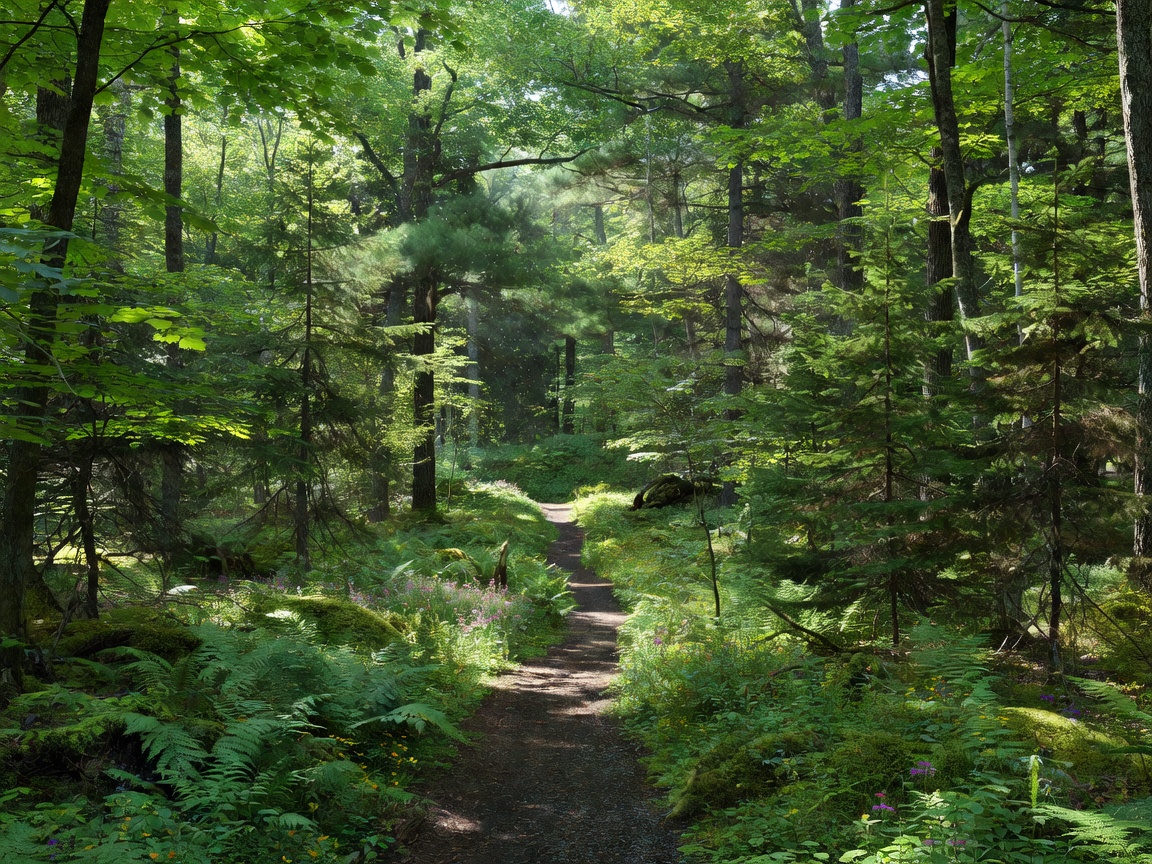
No forest type is uniform. Management, storms, soil and local climate create variation within a single stand. Use the categories below to anticipate conditions, then check the specific route before travelling.
Deciduous forests
Oak, beech, birch, maple and other broadleaf trees shape many European deciduous woods. Canopies change dramatically through the year. Summer shade can be dense; autumn leaf litter can hide roots; winter opens longer views but exposes more wind. Paths may become muddy after rain.
Coniferous forests
Pine, spruce, fir and related conifers can create darker, more regular stands, though natural and planted forests differ. Needles may soften the ground. Resin, bark texture and evergreen colour are common sensory details. Dense shade can reduce visibility, while exposed pine areas may be bright and dry.
Mixed forests
Mixed woodland combines broadleaf and conifer species. It often offers changing canopy height, varied ground cover and more seasonal contrast. The term does not describe one fixed structure. A managed mixed forest can have wide service tracks, while a natural-looking stand can contain uneven ground and fallen timber.
Boreal environments
Boreal forests occur across colder northern regions. Spruce, pine and birch are prominent in many places. Moss, lichen, bog and seasonal water influence movement. Snow, ice and limited winter daylight can alter access substantially. Summer insects and soft ground also deserve planning attention.
Mountain forests
Mountain woodland is defined as much by terrain as by trees. Slopes, switchbacks, rocks and streams can increase effort. Vegetation usually changes with elevation. Weather can shift quickly, and a trail that feels cool below may be exposed higher up. Choose footwear with reliable grip and allow time for descent.
Coastal woodland
Coastal forests experience salt, wind and changing moisture. Trees may be shaped by exposure. Sandy paths can be tiring; wet ground can be unstable near dunes or estuaries. Follow access signs and avoid fragile vegetation. Windproof layers are useful even when inland temperatures are mild.
Mediterranean woodland
Mediterranean landscapes may include pine, evergreen oak, cork oak, maquis and aromatic shrubs. Summer heat, dry vegetation and fire restrictions affect every visit. Early or late timing can reduce heat exposure, but daylight and local rules still apply. Carry enough water for the planned outing.
Good for
Deciduous forests suit visitors who want strong seasonal change. Coniferous and boreal settings offer moss, needle and evergreen textures. Mixed forests provide variety. Mountain sites suit people prepared for gradients. Coastal and Mediterranean woodland require closer attention to wind, heat, water and fragile surfaces.
What to know
Accessibility is not determined by forest type alone. Ask about gradients, surfaces, rest points, route width and seasonal closures. Keep to marked trails where required. Do not move deadwood, collect plants or enter restricted areas.